
- Learning curve
- Quick to pick up
- At the table
- Up to 8 players
Why it’s fun
It gives poker players somewhere to put their instincts without anyone having to bluff a stranger. The earlier you commit, the more it pays, so every hand is a small dare.
How to play
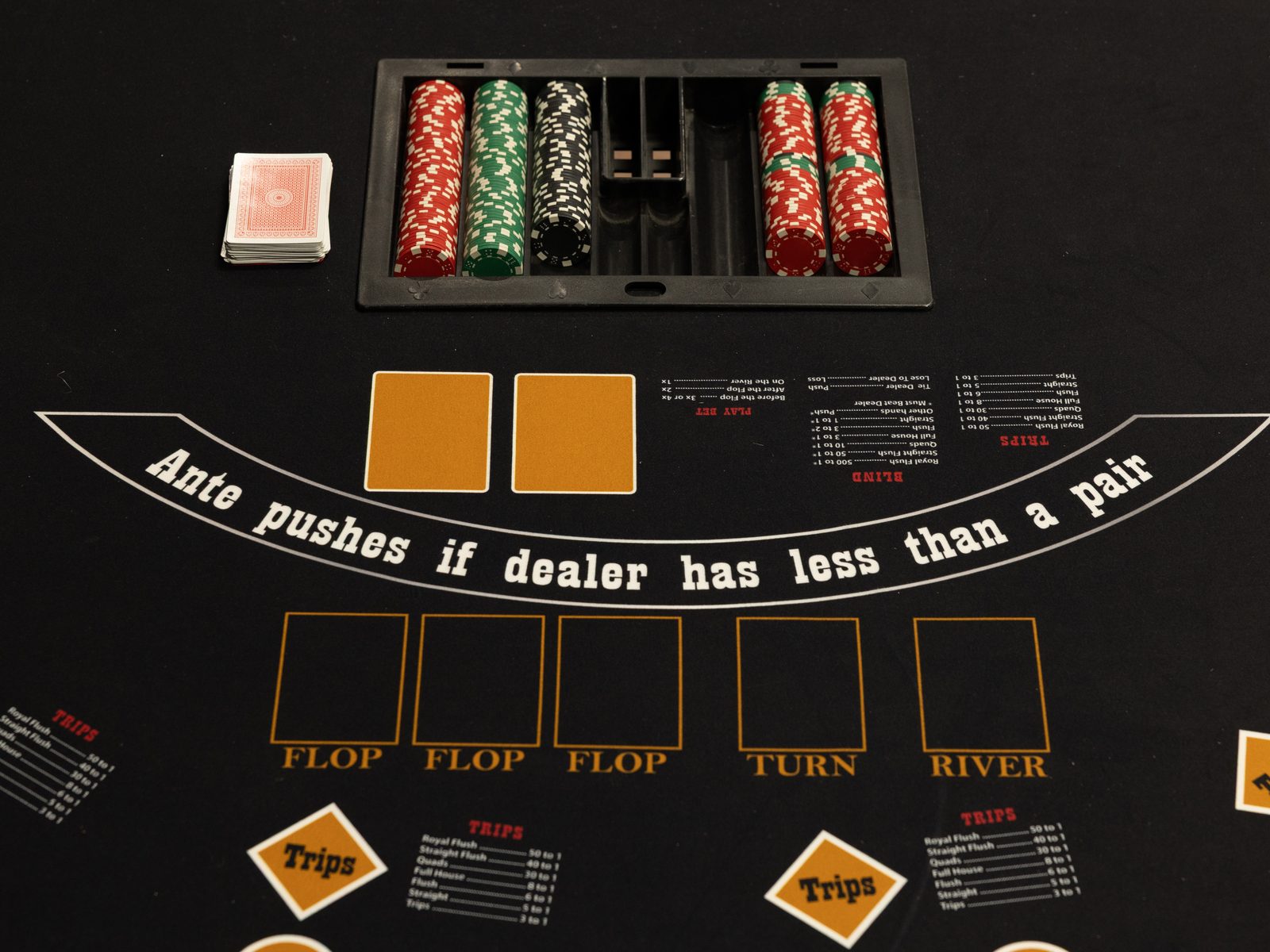
The cards work exactly like Texas Hold'em: two of your own, five shared in the middle, best five out of seven. What's different is who you're playing. Everybody at this table is up against the dealer rather than each other, so there's no bluffing and nobody is trying to read you.
Getting started. You put up two equal bets before any cards come out — the ante and the blind.
Your one decision. You get one more bet to make, and the only question is how early you're willing to make it. The earlier you commit, the bigger that bet is allowed to be.
After seeing just your own two cards, you can bet four times your ante.
If you'd rather wait, check and look at the first three shared cards. Now you can bet twice your ante.
Wait once more for the last two cards and you can bet once your ante — or fold and give up what's already on the table.
The showdown. The dealer turns their cards over. They need at least a pair to qualify. If they don't, your ante is handed back rather than paid. Beat the dealer and your bets are paid. Lose and they're collected. A tie leaves everything where it is.
The blind is the interesting one — it only pays out when you win with a genuinely strong hand, a straight or better.
It suits the poker player in your group who still wants to be part of the conversation.
How this differs from Texas Hold'em. The cards are identical and so are the hand rankings. Everything around them changes.
In Texas Hold'em you're up against the other players, betting on every street, and bluffing is half the point. Here you're up against the dealer, everyone at the table can win the same hand, and there's nobody to bluff — so a first-timer sitting next to a regular isn't at anybody's mercy.
The betting works the other way round too. Hold'em lets you keep raising as the cards come out. This gives you exactly one play bet, and waiting shrinks it: four times your ante before the flop, twice after it, once at the end.
And nobody gets knocked out. Every hand stands on its own, so guests can sit down halfway through the night and leave whenever they like without busting out of anything. That's what makes it the easier of the two to put in a room full of people who came to talk to each other.
Nobody expects you to arrive knowing this. Our dealers teach while they deal, and most guests pick a game up in a hand or two.